
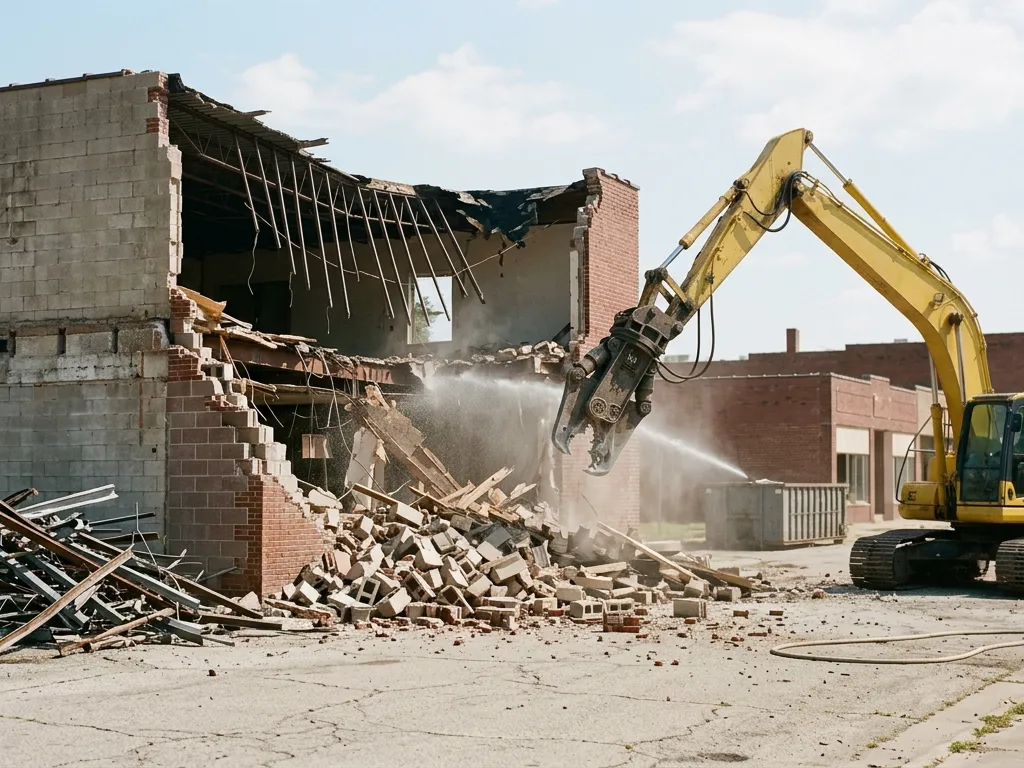
Small commercial buildings
Topeka Demolition: Commercial Demolition in Topeka, Kansas
Single-story stores, shops, offices and block buildings taken down with the asbestos survey, the State notice and the disposal paperwork in order.
- Topeka and 10 towns within 20 miles
- Written price before work starts
- Permit, sewer cap and landfill steps explained
- Local, licensed, insured contractors
Topeka Demolition connects Topeka property owners, investors and developers with local contractors for commercial demolition: vacant stores, old service stations, small office buildings, warehouses and shops cleared for a sale or a new building.
An asbestos survey and a KDHE notice filed 10 working days ahead add a few weeks and a modest fee; skipping them on a commercial building risks a stop-work order and an abatement bill that can add $2 to $3 per square foot to a demolition priced at $4 to $8.
Typical price range
$4 to $8 per square foot
A published range for commercial demolition of buildings from 1,000 to 5,000 square feet (HelloData and CommLoan guides); larger and multi-story buildings cost more per foot. Asbestos, underground tanks and heavy concrete or steel move the number most.
Calls answered Monday to Friday 7 a.m. to 6 p.m., Saturday 8 a.m. to 2 p.m.
Signs a commercial building is a teardown
- A vacant building that costs more to hold, insure and secure than it earns
- Roof failure across large spans, with water inside
- A layout no tenant or buyer can use without gutting it
- Structural steel or masonry damage from age, fire or a storm
- A sale or development that needs a cleared site
Asbestos and the State notice
Commercial demolition in Kansas runs through the Kansas Department of Health and Environment. Under K.A.R. 28-50-8, written notice goes to KDHE at least 10 working days before an asbestos-related demolition project, and asbestos is handled by a KDHE-licensed abatement contractor before the building comes down. An asbestos survey of the building is the first step, because the survey decides what has to be removed first.
Utilities, tanks and the City's steps
Commercial sites carry more services than houses: three-phase electric, larger gas and water services, sometimes fire lines, and occasionally an old underground fuel tank at a former service station. Each one is disconnected or closed before demolition. Inside Topeka, the sewer is capped at the property line and inspected, and the demolition permit comes through Development Services.
- Asbestos survey and any abatement completed first
- Utilities disconnected and fire lines closed by the providers
- Scrap steel and clean concrete separated for recycling
Partial demolition and lot clearing
Not every commercial job is a full teardown. An addition, a canopy, a loading dock or the inside of a building can come out while the rest stays; see interior demolition for gut-outs. For a cleared lot, the slab and footings come out under foundation removal. Commercial lots in the smaller towns nearby, such as Perry, usually go through the city clerk for the permit.
Neighbors, traffic and the right-of-way
Commercial buildings often sit close to sidewalks, streets and other buildings. Demolition next to a shared wall needs that wall protected or shored before the machine starts. Work beside a street may need traffic control, a closed sidewalk or space for trucks to stage, which involves the City. A contractor who has worked downtown and along Topeka's commercial corridors will plan the haul route and the staging before the first load.
Old service stations and shops can hide underground fuel or oil tanks. Those are closed or removed under State rules before the site is cleared, and a buyer will usually want the paperwork.
Questions people ask
How much does commercial demolition cost in Topeka?
A published range for buildings of 1,000 to 5,000 square feet is $4 to $8 per square foot, with larger buildings and asbestos raising the cost.
Does a commercial building need an asbestos survey before demolition?
Yes, as the first step, because Kansas requires asbestos handled by a licensed abatement contractor and a written KDHE notice at least 10 working days before an asbestos-related demolition.
What are the signs a commercial building should be demolished?
Holding costs above its income, a failing roof, a layout no tenant can use, structural damage, or a sale that needs a cleared site.
Can steel and concrete be recycled?
Usually. Scrap steel goes to a metal recycler and clean concrete to a processing yard, which can lower disposal costs.
How long does commercial demolition take?
The demolition itself is often days to a couple of weeks for a small building, after a survey, abatement and the 10-working-day notice.
Get a demolition price in writing
Tell the contractor what is coming down, where it is, and what should be left behind: bare dirt, a slab, or a seeded lot.
Call (785) 268-2537