
Slabs, footings and old foundations
Topeka Demolition: Foundation Removal in Topeka, Kansas
Slab-on-grade floors, crawlspace walls, piers and footings dug out and hauled, so the ground is ready for a new foundation or for grass.
- Topeka and 10 towns within 20 miles
- Written price before work starts
- Permit, sewer cap and landfill steps explained
- Local, licensed, insured contractors
Topeka Demolition connects Topeka owners with local contractors for foundation removal: the slab or crawlspace foundation left after a house, garage or shop comes down, or an old foundation found under the grass when a new project starts.
Digging out an old foundation costs $1,000 to $5,000 before the new one is formed; finding it with the excavator on the day the footings are dug stops the builder's crew and can add thousands in delay and change orders.
Typical price range
$1,000 to $5,000
The published range for foundation removal as part of a demolition (HomeAdvisor). A small shed or garage slab sits near the bottom; a large house slab with thickened edges, interior footings and plumbing in the slab sits near the top. Basements are priced separately because of the fill.
Calls answered Monday to Friday 7 a.m. to 6 p.m., Saturday 8 a.m. to 2 p.m.
Signs an old foundation is in the way
- A slab from a garage, shed or house that is no longer standing
- Concrete or stone showing when a garden or trench is dug
- A builder's survey or soil test that finds old footings
- A slab that cracked and settled after the building above it came down
- Plans for a new building in the same footprint
Slab, crawlspace or pier
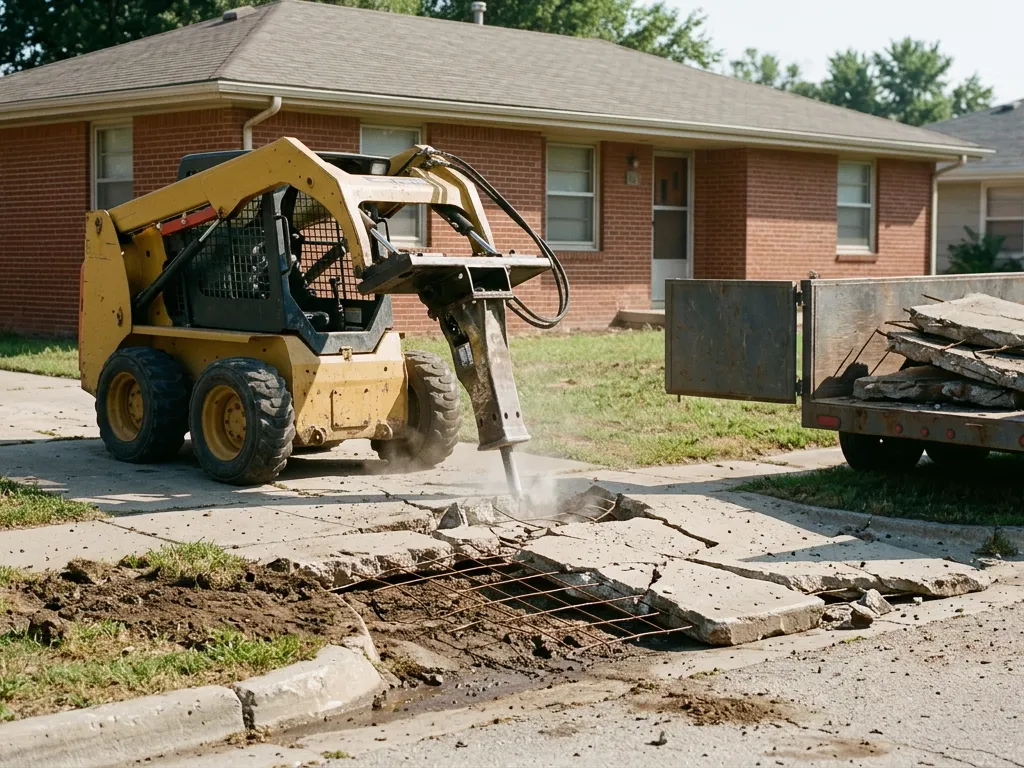
A slab-on-grade foundation is broken with a hydraulic breaker and lifted out in pieces, including the thickened edges that act as footings. A crawlspace foundation means short walls on a footing, which are knocked down and dug out. Pier foundations, common under porches, additions and older outbuildings, are pulled one at a time. Plumbing lines cast into a slab are cut and capped where they leave the lot.
Leave the ground ready for what comes next
Removing the concrete is half of the job. The other half is the hole it leaves: footings in Kansas go below the frost line, so pulling them leaves trenches that have to be backfilled and compacted. If a new foundation is going in, the builder may want the trenches left open and the ground undisturbed at depth; ask which before work starts.
- Fill compacted in lifts where grass or a driveway will go
- Trenches left for the builder where a new footing will be formed
- Grade sloped away from neighboring houses on small city lots
Where foundation removal fits
Foundation removal usually comes at the end of a house demolition or a garage teardown, or at the start of a teardown and rebuild. On larger lots around Scranton and the other Osage County towns, old farm foundations sometimes turn up under pasture when a new home site is cleared.
Equipment and disposal
Foundation work is heavy. A skid steer or excavator with a hydraulic breaker handles slabs and crawlspace walls, and a larger excavator pulls deep footings and thickened slab edges. Loads of broken concrete are heavy enough that dump trucks or rated containers are used rather than the light roll-offs that carry framing debris.
Clean concrete with the rebar cut out is often accepted by recyclers, which can cost less than landfill tipping. Concrete mixed with dirt, wood or other debris goes to a landfill licensed by the Kansas Department of Health and Environment, and the receipts should come with the job.
Questions people ask
How much does foundation removal cost?
Published figures run $1,000 to $5,000 for removing a foundation during a demolition, depending on its size, thickness and the footings under it.
Do footings have to come out?
For a new building in the same footprint, usually yes. For grass or a garden, they can sometimes be broken below grade and buried. The plan for the lot decides.
What are the signs an old foundation is buried on my lot?
Concrete or stone showing when you dig, a builder's test that hits it, or a slab that cracked after the building on it was removed.
What happens to plumbing in the slab?
It is cut and capped. The sewer is capped at the property line first, which the City inspects before a demolition goes ahead.
Can broken foundation concrete be recycled?
Clean concrete often can be. Concrete mixed with soil and debris goes to a licensed landfill.
Get a demolition price in writing
Tell the contractor what is coming down, where it is, and what should be left behind: bare dirt, a slab, or a seeded lot.
Call (785) 268-2537