
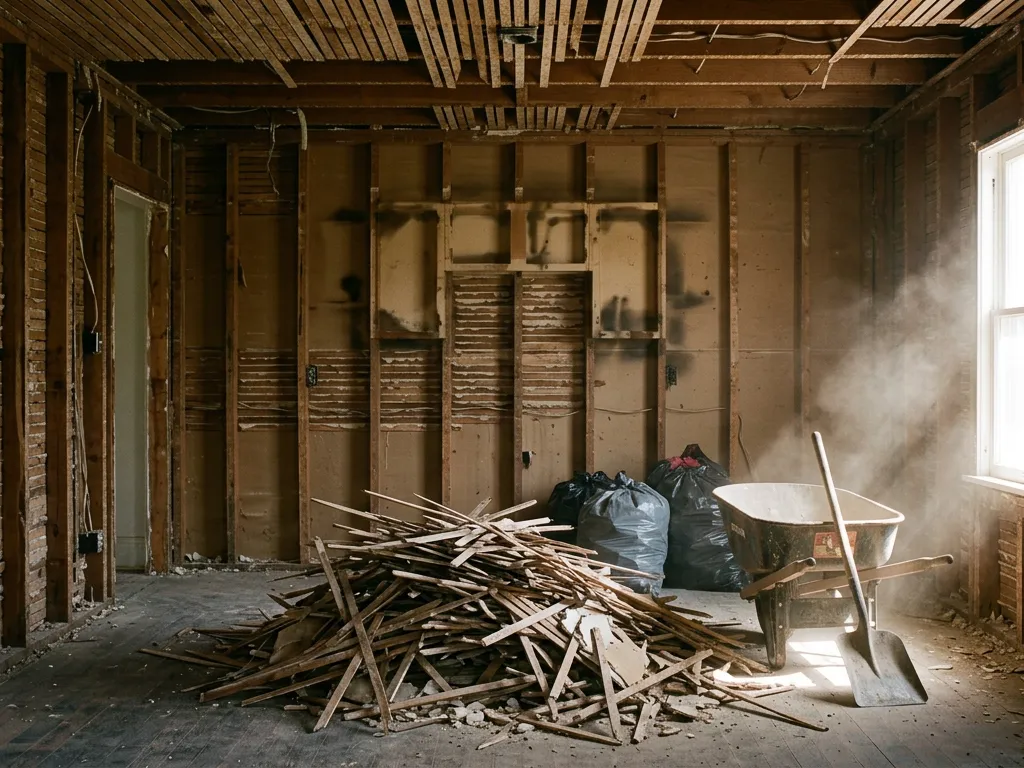
Gut-outs and selective demolition
Topeka Demolition: Interior Demolition in Topeka, Kansas
Kitchens, bathrooms, basements and whole floors stripped to the studs and joists, with the structure that stays protected and the debris hauled out.
- Topeka and 10 towns within 20 miles
- Written price before work starts
- Permit, sewer cap and landfill steps explained
- Local, licensed, insured contractors
Topeka Demolition connects Topeka owners, landlords and remodelers with local contractors for interior demolition, the selective tear-out that takes a room or a whole house back to framing so the rebuild starts on a clean, inspected shell.
Spending $1,000 to $2,300 to strip a bathroom down to the joists is cheaper than finding rotten subfloor under new tile, when tearing the finished room back out costs that much again.
Typical price range
$1,067 to $5,057
The published range for smaller interior demolition projects (HomeAdvisor), at about $2 to $7 per square foot. A kitchen runs $500 to $3,000, a bathroom $1,000 to $2,300; a whole-house gut can run $2,000 to $20,000. Lath and plaster costs more to remove than drywall.
Calls answered Monday to Friday 7 a.m. to 6 p.m., Saturday 8 a.m. to 2 p.m.
Signs a remodel needs a full tear-out
- Water stains that keep coming back through new paint
- Floors that flex or bounce near the tub, toilet or dishwasher
- Old knob-and-tube wiring or ungrounded outlets throughout
- Musty smell from walls or under cabinets
- Cracked plaster walls that will not hold new fixtures
What gets taken out and what stays
Interior demolition is planned around what remains. Before anything is pulled, the contractor confirms which walls carry load, where plumbing stacks and gas lines run, and which finishes the owner wants saved. Cabinets, doors and trim that can be reused are taken off by hand; drywall, plaster and flooring come out with bars and shovels and go down a chute or out a door into a roll-off.
Lath, plaster and the older Topeka house
Topeka's median house was built in 1967, and about four in ten were built before 1960. Older houses mean plaster on wood lath, which is heavier, dustier and slower to remove than drywall, and they can hold asbestos in floor tile, pipe wrap and textured ceilings and lead in old paint. A test before demolition decides whether part of the job needs an abatement contractor.
- Dust walls of plastic sheeting and negative air for an occupied house
- Floors and stairs covered where crews carry debris out
- HVAC returns sealed so dust does not travel through the ducts
Basements, rentals and fire or water damage
Landlords gut units between tenants, owners finish old basements, and insurance jobs strip out soaked or smoke-damaged materials. Each is selective demolition with a different stopping point. If the damage reached the framing, fire-damaged house demolition explains when a full teardown makes more sense. Rental owners in Carbondale and other small towns nearby often book a gut and a dumpster on the same visit.
Pricing by material
Interior demolition is priced by what comes out. One national guide puts tile removal at $2 to $4 per square foot, carpet at 50 cents to $1.50, hardwood at $4 to $8, drywall at 50 cents to $1, cabinets at $150 to $1,000, and a staircase at $300 to $4,000. Dumping fees run $200 to $1,000 depending on how many loads leave the house.
Plaster on lath costs more than drywall because it is heavier and slower to remove, and it fills containers faster. A good quote names each material and the number of roll-offs, so you can see where the money goes and decide whether to save anything.
Questions people ask
How much does interior demolition cost in Topeka?
Published figures run $1,067 to $5,057 for smaller projects, or about $2 to $7 per square foot. Kitchens run $500 to $3,000 and bathrooms $1,000 to $2,300.
Can I live in the house during interior demolition?
Often, if the work is limited to a few rooms and the crew builds dust walls and seals the ducts. A whole-house gut usually means moving out.
What are the signs a room needs a full gut?
Recurring water stains, soft floors near plumbing, old wiring, a musty smell or plaster that will not hold fixtures. Those point to problems behind the finish.
Do I need an asbestos test before gutting an old house?
For a house built before about 1980 it is the safe order. Floor tile, pipe wrap and textured ceilings are the usual places asbestos turns up.
Who removes load-bearing walls?
Only after an engineer or builder sizes the beam that replaces it. Demolition crews take the wall out once the temporary shoring and the new beam plan are in place.
Get a demolition price in writing
Tell the contractor what is coming down, where it is, and what should be left behind: bare dirt, a slab, or a seeded lot.
Call (785) 268-2537