
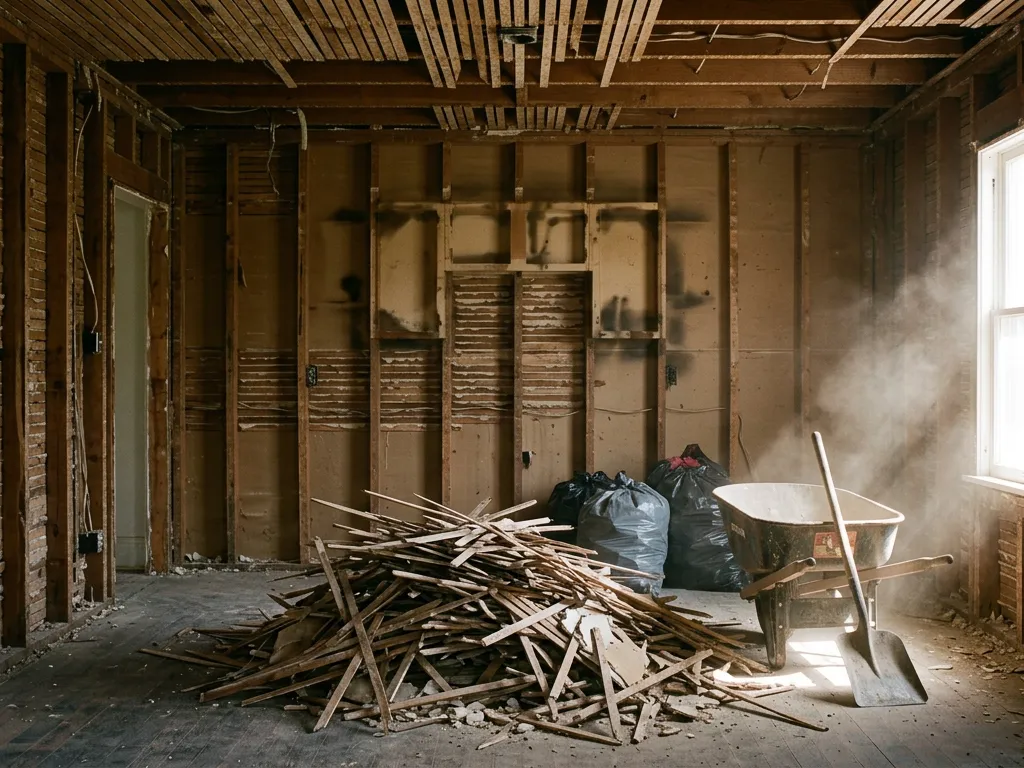
What to expect on demolition day
Topeka Demolition: What to Expect on Demolition Day in Topeka, Kansas
A plain account of a teardown day, from the machine coming off the trailer to the last truck leaving, so nothing about it is a surprise.
- Topeka and 10 towns within 20 miles
- Written price before work starts
- Permit, sewer cap and landfill steps explained
- Local, licensed, insured contractors
Topeka Demolition wrote this for owners in Topeka who have never watched a house come down, because knowing what the day looks like makes it easier to plan around, to warn the neighbors, and to tell when a job is going the way it should.
The week before
Locates are called in through Kansas 811 so buried lines in the yard and the right-of-way are marked with paint and flags before the machine arrives.
- Electric and gas services removed by the providers, and water shut at the curb
- The sewer capped at the property line and inspected, inside Topeka
- The permit issued and posted where the contractor can show it
- Everything you want to keep taken out, including fixtures you plan to sell
- Neighbors told the date, and cars moved off the street in front of the house
Morning, the machine arrives
The excavator arrives on a lowboy trailer and is unloaded at the curb. Roll-off dumpsters or end-dump trucks are set where they can be loaded without blocking the street. The crew walks the site, checks the marked lines, and sets up a hose or water supply for dust control. If there are trees to save, their protection goes up now.
Midday, the house comes down
Demolition usually starts at the back or one end and works toward the street, so the machine always has room. The grapple pulls the roof and walls down in sections, which keeps debris inside the footprint. Water is sprayed on the work to hold dust down. Each load is placed in the dumpster or truck, with metal set aside for scrap where the contractor recycles it. A one-story house can be on the ground by early afternoon.
Calls answered Monday to Friday 7 a.m. to 6 p.m., Saturday 8 a.m. to 2 p.m.
Afternoon, the foundation
With the house down and loaded, the crew turns to the foundation. A slab is broken with a breaker or the bucket and hauled. A basement is broken out or broken below grade, the floor is cracked so water can drain, and filling begins. On larger houses this carries into a second or third day.
The last day, fill and grade
Clean fill goes into the basement in lifts, each compacted before the next. The lot is graded so water runs away from the neighbors, and the surface is left raked and ready for seed if that is what the quote said. Landfill receipts are gathered for your records. City demolition specifications describe the same finish: a site graded to drain and ready for seed.
What you should and should not do
Watch from a safe distance across the street, never inside the work area, and keep children and pets away. Take photos for your records if you like. Ask questions before the machine starts or after it stops, not while it is swinging. And keep the contractor's paperwork, including the permit, the sewer cap inspection and the landfill receipts, because a buyer, lender or builder may ask for it later.
For the steps behind the day, see house demolition. Rural jobs around towns like Maple Hill add septic tanks, wells and propane to the list before the machine arrives.
What can go differently than planned
Most days go to plan, but a few things change the schedule. Rain can soften the ground enough that the contractor waits rather than ruts the yard and the street. A buried tank, an old cistern or an unmarked line found during the work stops the machine until it is dealt with. Asbestos found in a material that was not tested sends that part of the job to an abatement contractor. None of these is unusual, and a good contractor will tell you what was found and what it means for the schedule and price.
Noise, dust and the neighbors
A teardown is loud while the machine is working, usually during normal working hours. Dust is kept down with water, but some drifts on a windy day. Trucks come and go through the day. Telling neighbors the date ahead of time, asking them to keep cars off the street in front of the house, and giving them a number to call if something worries them heads off most complaints. If a shared fence or a neighbor's tree is close to the work, talk about it before the day, not during it.
After the crew leaves
A finished lot should be level or gently sloped away from neighboring houses, free of debris on the surface, and ready for seed if that was in the quote. Walk the lot and look for low spots, debris and damaged curbs or sidewalks, and raise anything you see before the final payment. Then seed or sod soon, especially on clay, so rain does not wash the new grade into the street.
Rural jobs and farmsteads
On an acreage, demolition day looks much the same, with a few additions. The propane supplier has already removed the tank, the septic tank and well are marked so trucks stay off them, and the route for loaded trucks avoids soft ground and culverts. Barns may get a salvage crew first. Debris travels farther, so trucks may come and go less often but over a longer day.
If you are not in town
Many owners who need a house torn down live somewhere else, often after inheriting it. You do not need to be there. Arrange access for the walk-through, agree on the scope and price in writing, and ask the contractor to send photos at the start, during the work and when the lot is finished. Ask for the permit, the sewer cap inspection and the landfill receipts by email. A neighbor you trust can keep an eye on the day and let you know how it went.
Questions people ask
Do I need to be there on demolition day?
Not usually. Many owners stop by to watch from across the street and take photos, but the contractor runs the site.
How long does the house take to come down?
A one-story house is often on the ground in a few hours; the foundation and fill take the rest of the day or another day or two.
Will there be a lot of dust?
Some, but crews spray water on the work as they go to keep dust down for the neighbors.
What paperwork should I keep?
The permit, the sewer cap inspection, landfill receipts and the contractor's written scope, in case a buyer or builder asks.
What should I tell the neighbors?
The date, that it will be loud for a day or two, and to keep cars off the street in front of the house.
Get a demolition price in writing
Tell the contractor what is coming down, where it is, and what should be left behind: bare dirt, a slab, or a seeded lot.
Call (785) 268-2537