
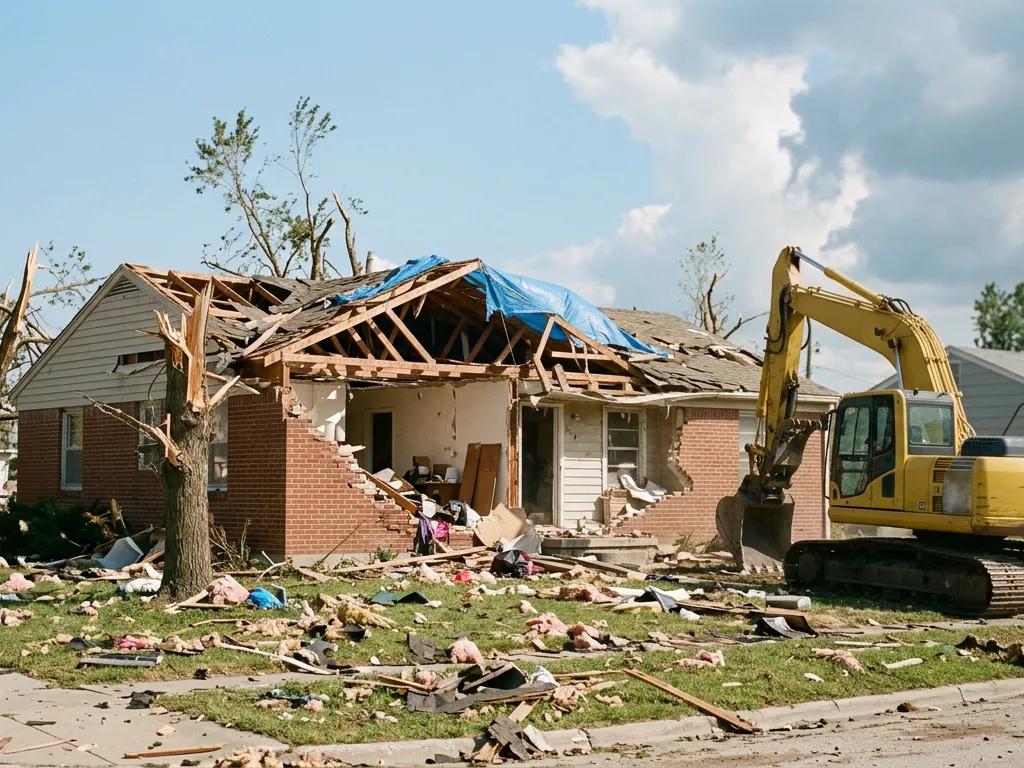
Demolition mistakes to avoid
Topeka Demolition: 7 House Demolition Mistakes That Cost Topeka Owners
Most expensive demolition problems are decided before the machine arrives. Here are the seven we see most often.
- Topeka and 10 towns within 20 miles
- Written price before work starts
- Permit, sewer cap and landfill steps explained
- Local, licensed, insured contractors
Topeka Demolition hears the stories after the fact: the basement that sank, the stop-work order, the fine for debris in the wrong place. Almost all of them trace back to one of seven decisions made before demolition day in Topeka.
1. Burying the house in its own basement
Pushing framing, drywall and debris into the basement and covering it with dirt is cheap on the day and expensive forever. Organic material rots and leaves voids; the lawn sinks; anything built there cracks. Basement fill should be clean dirt placed in lifts and compacted, with the floor cracked so water drains. Fixing a bad fill later means digging it all out again, which can approach the original basement fill cost of $5,000 to $25,000.
2. Starting before the utilities are truly gone
A meter turned off is not a service removed. Gas and electric services have to be physically disconnected by the providers, water shut at the curb, and locates called in. A contractor who swings a bucket into a live service is risking injury and a large repair bill.
3. Skipping the sewer cap
Inside Topeka, the sewer line is capped at the property line and inspected before the structure comes down. Skip it and debris and mud can wash into the public line, the inspection fails, and work stops. It is one of the easiest steps to do right and one of the most expensive to do wrong.
Calls answered Monday to Friday 7 a.m. to 6 p.m., Saturday 8 a.m. to 2 p.m.
4. Ignoring asbestos in an older house
Houses built before about 1980 often contain asbestos in siding, floor tile, pipe wrap or textured ceilings. Breaking it during demolition spreads fibers through the debris and the neighborhood. Testing first, and abatement by a licensed contractor where needed, keeps the job legal and the debris disposable. For asbestos-related demolition projects, Kansas requires written notice to KDHE at least 10 working days ahead.
5. Taking the lowest number without reading it
A quote thousands lower than the others has usually left something out: the basement, the disposal, the compaction, or the grading. Compare quotes line by line, and ask each contractor where the debris is going and whether the landfill receipts are included.
6. Forgetting what the lot is for
If a new house is going up, the builder may want the old basement dug out rather than filled, or the footings left for inspection. If the lot is being sold, a clean, graded, seeded lot sells better. Decide the end state first and put it in the quote; changing it after the fill is in costs a second mobilization.
7. Leaving neighbors and trees out of the plan
Demolition is loud and dusty for a day or two. Telling neighbors the date, keeping dust down with water, and protecting shared fences avoids most complaints. Trees you want to keep need their root zones fenced before the machine tracks in; a dead tree a year later is an expensive surprise.
The full sequence is on the house demolition page. Owners in towns like Ozawkie, where the ground is shallow over rock, should ask about fill before the job is scheduled.
Mistakes owners make with the money
Paying the full price up front is a risk in any trade. A common arrangement is a deposit, with the balance due when the work is done and the receipts are in hand. Another money mistake is not asking about salvage or recycling: clean concrete and scrap metal often cost less to dispose of, and barns and older houses may have materials worth something. A third is forgetting the items that are not demolition at all, such as contents left in the house, a septic tank to close or a well to plug, and being surprised when they appear as extra charges.
Mistakes that start with the wrong trade
Junk haulers clear contents and small structures well, but a house with a basement is excavator work with a permit, a sewer cap and compaction behind it. Hiring the wrong trade usually shows up in the finish: a slab left in the ground, a basement half filled with debris, a lot that was never graded. For a full teardown, ask whether the company runs its own excavator and handles the foundation and grading.
A short checklist before you sign
- Written quote naming the structure, foundation plan, permit, sewer cap, disposal and finish
- Utilities called the same week you decide
- Asbestos test on any house built before about 1980
- Builder or buyer asked what the lot should look like
- Neighbors told the date, trees to save fenced off
One more: waiting too long
The most common mistake of all is not on the list above because it happens before any of them: waiting. A vacant house with a failing roof gets worse every season, animals move in, floors weaken, and the City's citations add up. A house that could have come down cleanly in a dry fall becomes a wet, unsafe shell that costs more to remove and is harder to insure while it stands. Once the decision is clear, start the utility calls the same week and keep the paperwork moving.
Mistakes after the crew leaves
The job is not quite over when the machine is loaded onto the trailer. Walk the lot before the final payment and look for low spots, debris on the surface, and damage to curbs, sidewalks or a neighbor's fence. Keep the permit, the sewer cap inspection, the asbestos results and the landfill receipts together, because a buyer or builder will ask. And seed or sod the lot soon, especially on clay, so the first heavy rain does not wash the new grade into the street and leave you paying to fix it.
Questions people ask
Can I push the house into the basement to save money?
No. Wood and debris rot and leave voids that settle. Use clean fill placed in compacted lifts.
What happens if the sewer is not capped before demolition in Topeka?
The inspection fails and work stops, and debris can enter the public sewer. The City requires the cap before demolition.
Do I really need an asbestos test?
On a house built before about 1980, yes. It decides whether abatement is needed before demolition.
Why are some demolition quotes much cheaper?
They usually leave out the basement work, disposal, compaction or grading. Compare line by line.
What is the most expensive demolition mistake?
A badly filled basement, because fixing it means excavating and refilling the whole hole, which can cost as much as $5,000 to $25,000.
Get a demolition price in writing
Tell the contractor what is coming down, where it is, and what should be left behind: bare dirt, a slab, or a seeded lot.
Call (785) 268-2537